
Basketball Betting Profitability: Analyzing Long-Term Returns
 Available in US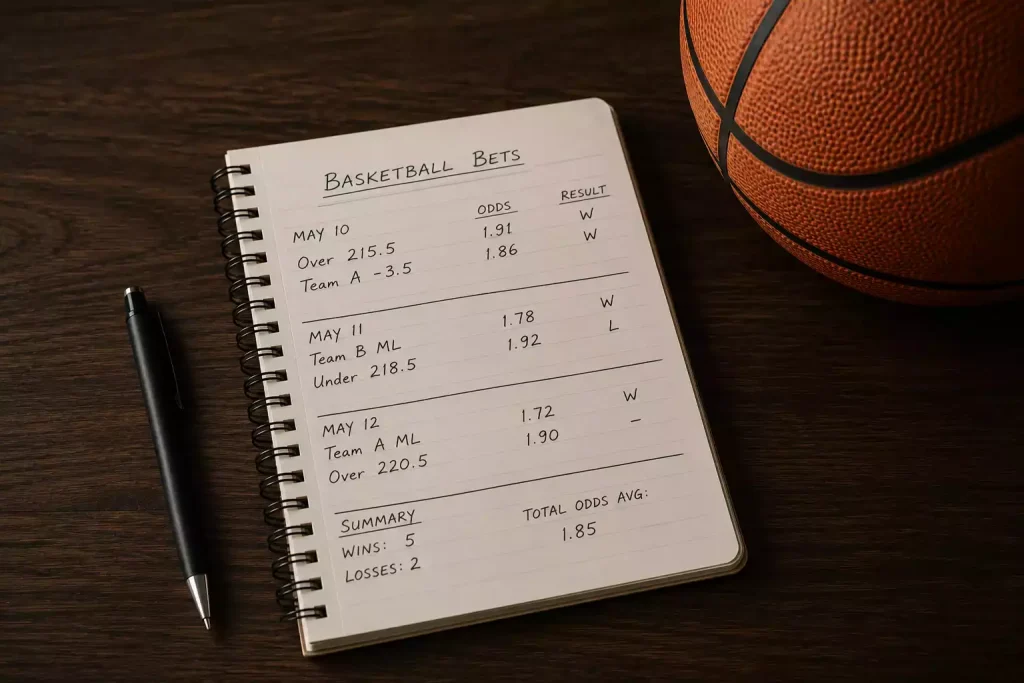
The honest answer is: for most people, no. The global basketball betting market is valued at $8.7 billion, and the vast majority of that money flows from bettors to bookmakers. But the honest answer also has a nuance: a small percentage of bettors do profit consistently, and understanding what separates them from the majority is the first step toward deciding whether the pursuit is worth your time and money.
This guide presents the mathematics of basketball betting profitability without the hype. The bookmaker’s structural edge, the win rate required to overcome it, the distinction between sharp and recreational bettors, and the realistic expectations for yield and variance that every serious bettor should internalise.
Calculating Bookmaker Margins and Expected Loss
The UK remote gambling sector generated gross gambling yield of £7.8 billion in the year to March 2025, a 13.1% increase year-on-year. That revenue comes from the margin – the structural advantage built into every set of odds. Understanding this margin is understanding the obstacle you need to overcome.
On a standard NBA spread bet, both sides are typically priced at 1.91 (the equivalent of -110 in American odds). The implied probability of each side is 52.36%, which means the combined implied probability is 104.72% – the 4.72% above 100% is the overround, and it represents the bookmaker’s expected profit on every pound wagered. If both sides attract equal action, the bookmaker profits regardless of the outcome.
The overround varies by market and operator. NBA spreads at competitive UK bookmakers carry 4-5% overround. NBA moneylines carry slightly higher overround on mismatched games (6-8%) because one side has very short odds. Player props carry the highest overround – often 7-10% – because the market is less liquid and the bookmaker faces more uncertainty. Every bet you place starts at a mathematical disadvantage proportional to the overround on that specific market.
What Win Rate You Need to Break Even on Basketball Bets
At standard 1.91 odds on NBA spreads, the breakeven win rate is 52.36%. This means you need to win more than 52 out of every 100 bets just to avoid losing money. Ian McGinley, speaking about the universal challenges facing sports betting markets, noted that the problems the industry faces are not unique to one jurisdiction but arise in every market in the same way. The margin-driven disadvantage is one such universal problem.
That 2.36% gap above 50% is your hurdle rate, and it’s harder to clear than it sounds. Over a small sample of 50 bets, random variance easily produces win rates above 55% or below 45% – the noise drowns out any signal of skill. Over 500 bets, the noise diminishes, and whether you’re genuinely above breakeven becomes clearer. Over 2,000+ bets, your long-term win rate stabilises enough to draw meaningful conclusions.
On different markets, the breakeven shifts. At 1.95 odds (a competitive line you might find through line shopping strategies), breakeven drops to 51.28%. At 1.87 (a poor price), it rises to 53.48%. The difference between a 51.28% and 53.48% breakeven is enormous in practice – it means the bettor at the worse price needs to be significantly more skilled to achieve the same profitability.
Sharp vs Recreational Bettors: Who Profits and Why
Sharp bettors – professionals and semi-professionals who treat betting as a discipline – represent a small fraction of the betting population but account for a disproportionate share of the profitable fraction. What distinguishes them isn’t a secret system; it’s a combination of edge identification, volume, discipline, and margin minimisation.
Sharp bettors identify edges through superior information processing. They don’t know more than the bookmaker; they process the same information faster or weight it differently. A sharp might identify that a specific team’s performance following a long road trip is consistently worse than the market prices in, and exploit that angle systematically across the season. The edge per bet is tiny – often 1-3% expected value above breakeven – but applied consistently across hundreds of bets, it compounds into meaningful profit.
Recreational bettors lose not because they lack basketball knowledge but because they don’t approach betting as a quantitative discipline. They bet based on preferences, narratives, and emotional responses rather than probability assessments. They use a single bookmaker rather than shopping for odds. They don’t track their results rigorously. And they often overbet relative to their bankroll, exposing themselves to ruin risk that eliminates the possibility of long-term recovery.
Realistic Expectations: Yield, Sample Size, and Variance
A consistent 2-5% yield on basketball spread bets is genuinely excellent. That means for every £100 staked, you profit £2-5 on average. It doesn’t sound dramatic, and it isn’t – but over £50,000 in total stakes across a season (achievable with £100 per bet, 500 bets), a 3% yield is £1,500 in profit. At £200 per bet, it’s £3,000. The returns are proportional to volume and stake size, not to individual-bet excitement.
Variance is the psychological enemy of profitability. Even a genuinely profitable bettor with a 54% long-term win rate on spreads will experience losing streaks of 8-12 bets. They’ll have months where they’re down 15-20 units. They’ll question whether their edge has disappeared. The difference between profitable and unprofitable bettors isn’t the absence of losing streaks; it’s the response to them. Profitable bettors maintain their process through negative variance because they’ve run the numbers and know that short-term results don’t invalidate a long-term edge.
The minimum sample for evaluating your own profitability is 500 bets at consistent stakes. Below that, you’re essentially guessing whether your results reflect skill or luck. If your records show profitability across 1,000+ bets, you have reasonable evidence of a genuine edge. If they show a loss, the evidence points the other direction, and the honest response is to either change your approach or accept that betting is entertainment with a cost attached.
What percentage of basketball bettors are profitable long-term?
Estimates suggest that fewer than 3-5% of sports bettors are profitable over a sustained period of 1,000+ bets. The exact figure for basketball specifically is not publicly available, but the structural mathematics – a bookmaker margin of 4-5% on spread bets requiring a 52%+ win rate to break even – ensures that the majority of bettors lose over time.
How much does the bookmaker"s margin reduce basketball betting returns?
On standard NBA spread bets at 1.91 odds, the bookmaker"s margin (overround) is approximately 4.7%. This means that for every £100 wagered, the bookmaker expects to retain roughly £4.70 on average. On player props and exotic markets, the margin can reach 7-10%, increasing the expected loss per bet. Line shopping across operators can reduce the effective margin by 1-2 percentage points.
Is it easier to profit from basketball betting or football betting?
Neither is objectively easier to profit from, as both require overcoming bookmaker margins and demonstrating sustained analytical edge. Basketball"s faster pace and higher scoring creates more data points per game, which some analytical bettors find advantageous. Football"s lower scoring makes individual events more impactful and arguably harder to predict. The key factor is the bettor"s expertise in their chosen sport rather than an inherent profitability difference between the two.
Articles
Published by the Betting Basketball UK team.
